Archaeogenetics
Archaeogenetics investigates DNA recovered from ancient archaeological remains such as teeth or bones to study past human populations and the pathogens that affected them. In addition to human genetic information, ancient samples can contain DNA from infectious agents present at the time of death, allowing direct insight into the causes of historical disease outbreaks. These data make it possible to identify the pathogens responsible for epidemics and pandemics in both historic and prehistoric periods, and to trace their evolutionary trajectories through time.
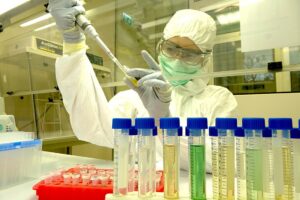
Within EUROpest, archaeogenetics will contribute to the identification of pathogens associated with specific regions and outbreak contexts across Europe. By comparing genetic evidence from multiple sites and time periods, it becomes possible to reconstruct connections between outbreaks, track how pathogen distributions and relationships change over time, and build a relational network of disease spread in space and time. These patterns can then be integrated with evidence from other disciplines within the project.
The project plans to analyse approximately 2,000 human remains using archaeogenetic methods, complemented by targeted palaeopathological assessments to identify diseases that leave skeletal traces. Beyond detecting key pathogens such as Yersinia pestis, the EUROpest archaeogenetic framework will also explore the role of additional infectious agents and potential comorbidities as well as investigate pathogen evolution, including changes in virulence factors.

Archeogenetics Lab in the Max Planck Institute for Evolutionary Anthropology