History
The second plague pandemic was initially defined before professional historians set out to study any of its outbreaks with vigour. The discipline of history, however, came to shape, reshape and reshape again our collective understanding of the Black Death and the fourteenth- through nineteenth-century plague outbreaks that followed it over the second half of the twentieth century.
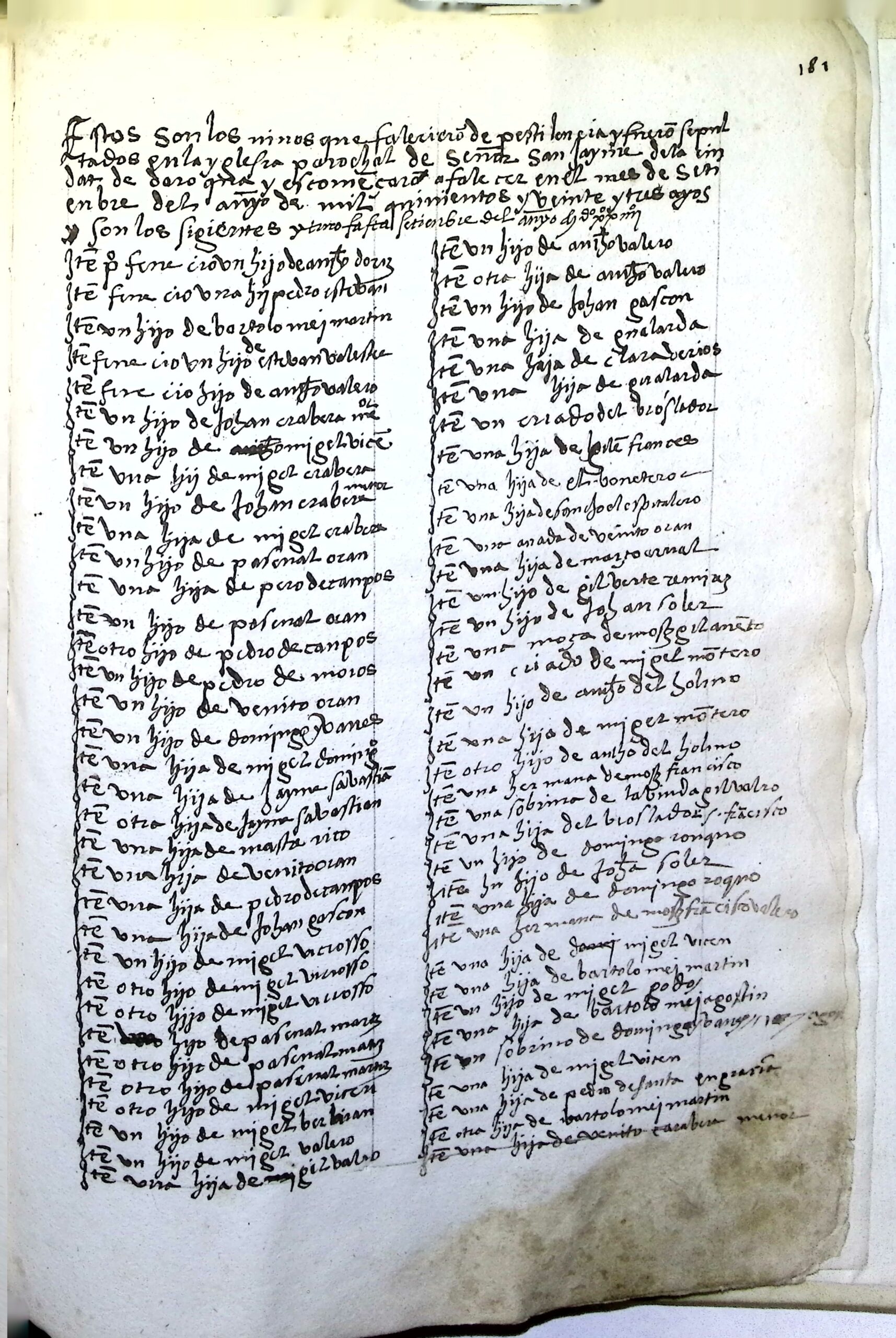
The examination of diverse written sources – from plague treatises to correspondence to chronicle narratives to tax registers to public health ordinances – composed in many languages not only came to frame how the pandemic was studied but also to determine what aspects of the pandemic could and would be studied. From the late twentieth-century onwards, disease ecology and epidemiology came to inform our histories of premodern plague and over the last 15 years bioarchaeology and palaeogenetics have become increasingly central to our efforts to recover plague’s premodernity. Nevertheless, written sources, the questions historians ask and the narratives historians write continue to set the stage on which plague interdisciplinarity plays out. Historical methods are, as such, a critical element of EUROpest.
Working from the ground up with specialists in adjacent but complimentary fields, EUROpest historians will not seek out to determine the local, regional and interregional demographic, economic or social consequences of specific plague occurrences, as historians long have, but rather to build up the contexts within which plague outbreaks – plague outbreaks that have been carefully selected for analysis within the framework of EUROpest because either of the availability of complimentary paleoscientific datasets or the ability to generate new such datasets in a timely fashion – took place. EUROpest historians will work to reconstruct the cultural, demographic, economic, environmental and social settings that plague outbreaks occurred within, paying attention to the quotidian and mundane as well as the singular and extraordinary.
As we aim to explain heterogeneity in plague’s morbidity and mortality, its uneven geography and its transmission, historians will undertake exhaustive and critical appraisals of collections of written sources relevant to the contexts of the individual outbreaks selected. Varied archival materials and edited sources from southwest to northeast Europe, and from the fourteenth century to the nineteenth, will inform our individual reconstructions of the settings of outbreaks, of years leading up to, through and after outbreaks took place.